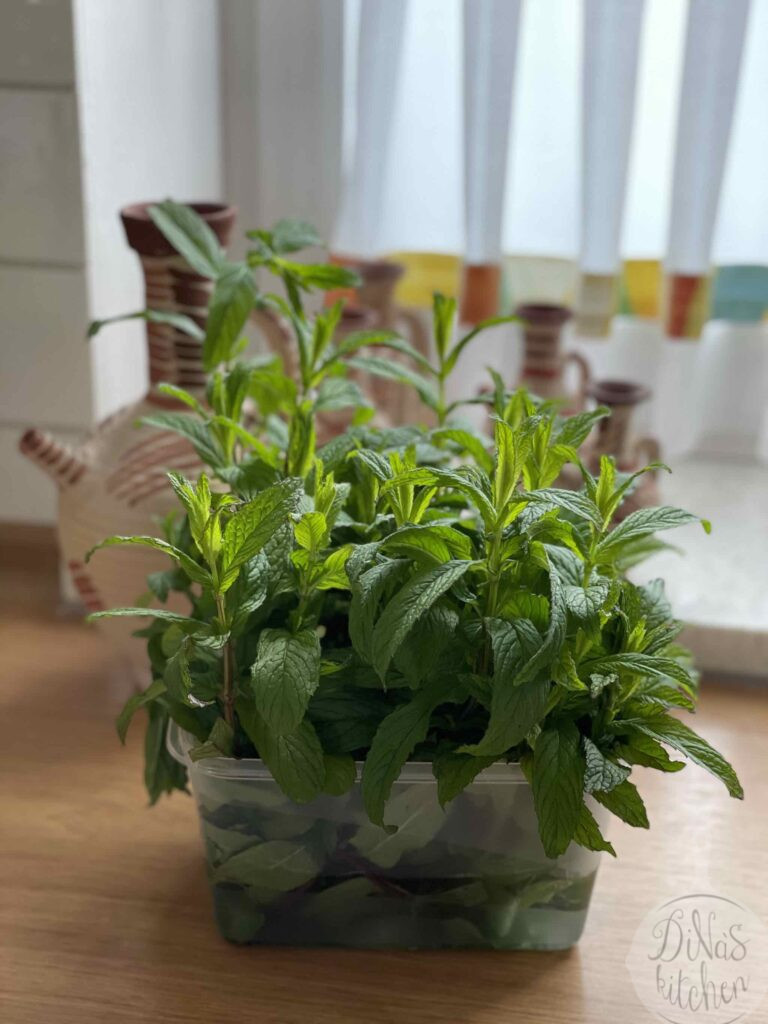
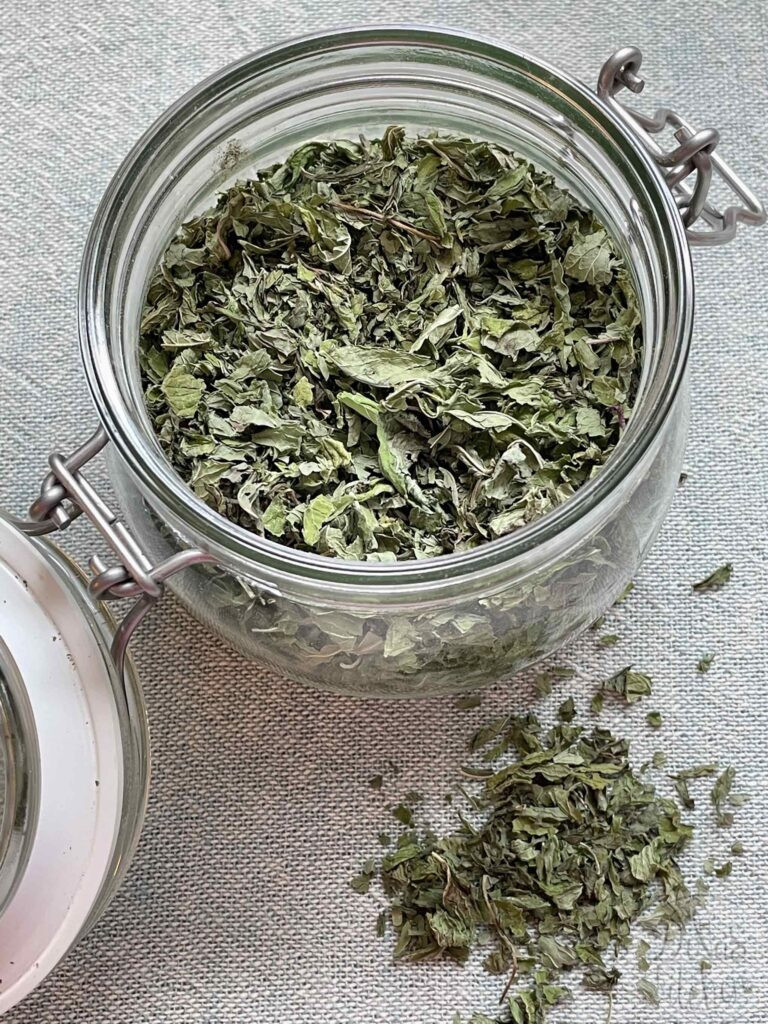
Fresh Spearmint is available in Lebanon all year round. We use it extensively in salads and mix it with meat and vegetarian kibbeh. A handful of mint leaves adds a delicate sweet and minty flavour to any dish, or to any labneh or shawarma sandwich. Like all mint varieties spearmint grows abundantly and spreads aggressively in gardens. When the right time comes for drying herbs in summer, spearmint leaves are dried on their stems to fill the pantry. We crush dried mint leaves in salad dressing, labneh dips, meat burgers, and in most cooked yoghurt dishes enlivening the flavours.
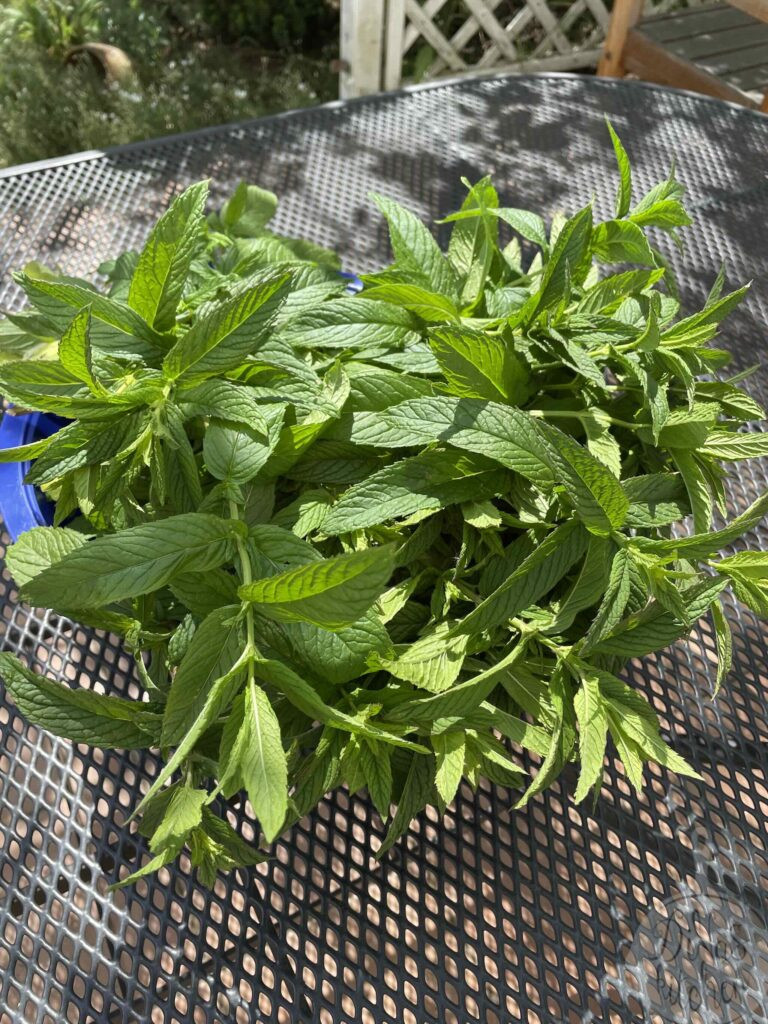
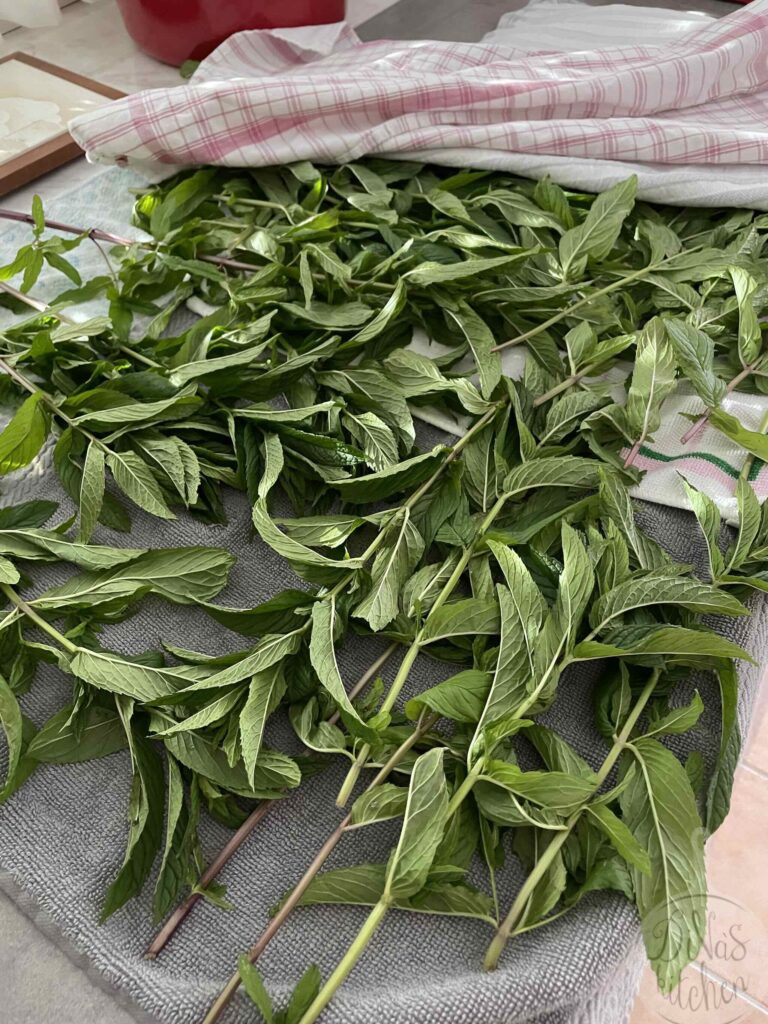
One day I brought back with me from Lebanon a spearmint cutting, eager to have it in my garden. It grows beautifully summer after summer spreading its light fresh fragrance with every breeze and enriching the taste of every dish. Many of my friends have taken a mint cutting from my plant and have become themselves the main distributors in their circle of friends. Knowing that a tiny cutting from Lebanon is spreading the gardens of Germany gives me utmost pleasure!
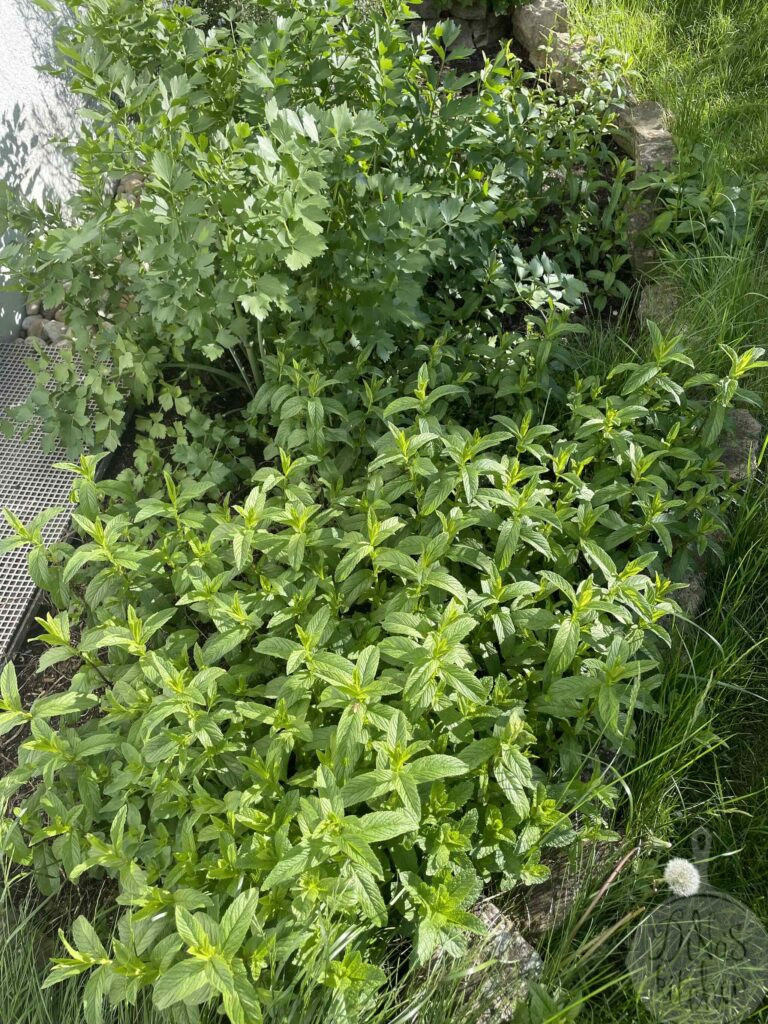
Difference between Spearmint, Mint and Peppermint
Mint leaves have a more intense green colour than spearmint leaves. The latter have a lighter colour and a softer texture, and they are extensively used in the Lebanese cuisine. They have a delicate, sweet, and mildly minty flavour because of their low menthol content
Peppermint on the other hand has 40% menthol content opposed to 0.5% in spearmint giving it a sharp peppery taste. For instance, peppermint is preferably used in desserts for its strong flavour.
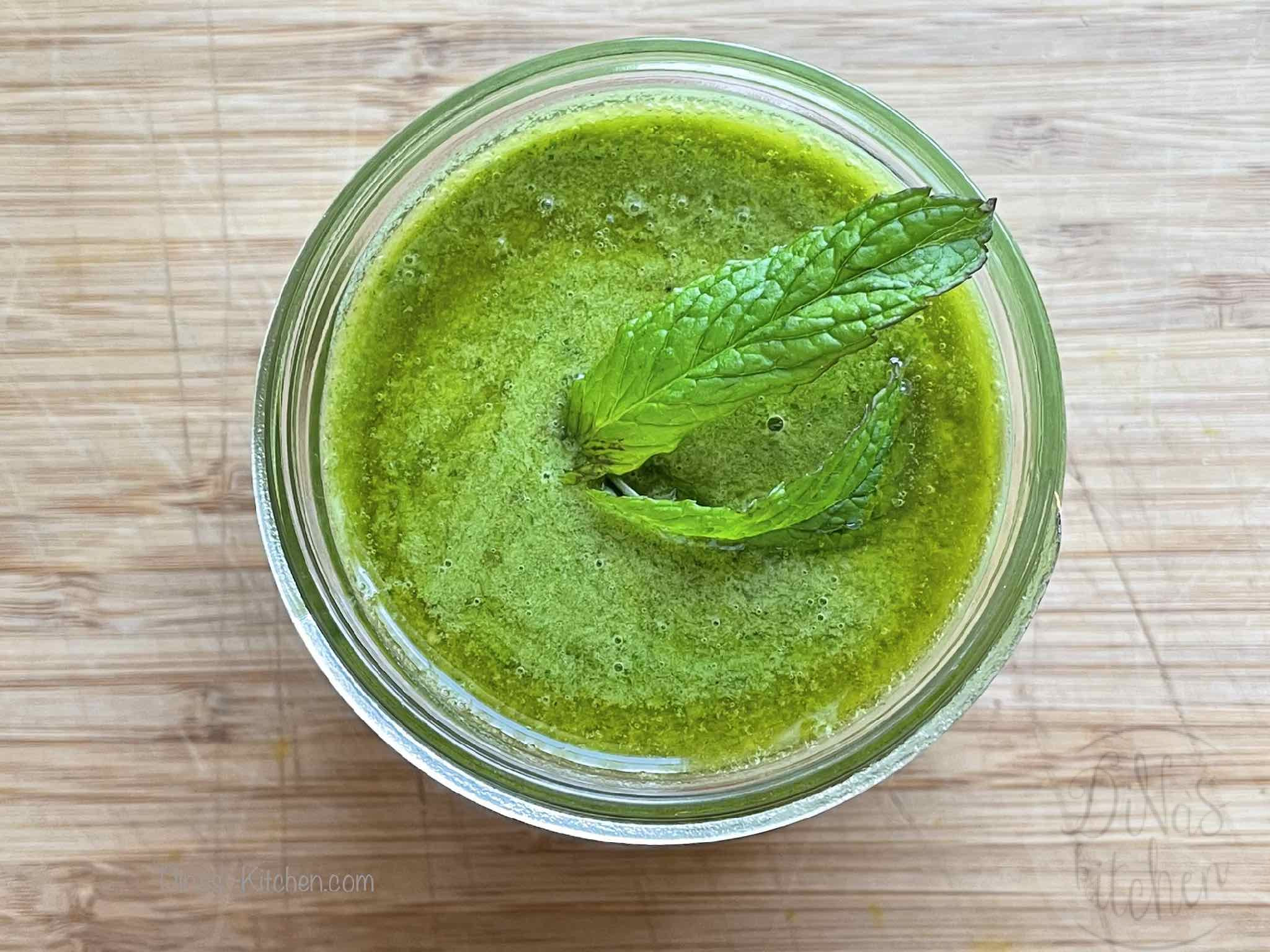
Mint Pesto
After drying quite a big amount this year, enough for more than one household, I tried my luck with a new mint pesto recipe. I think I have landed a hit! I have already consumed my first jar and already prepared my second.
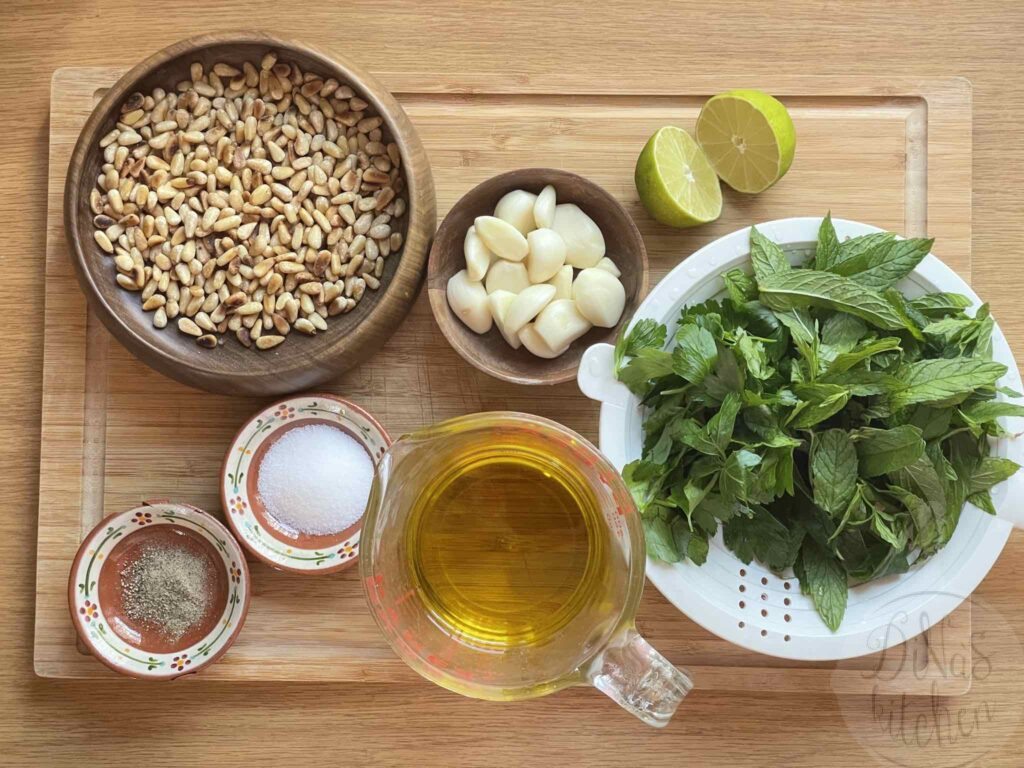
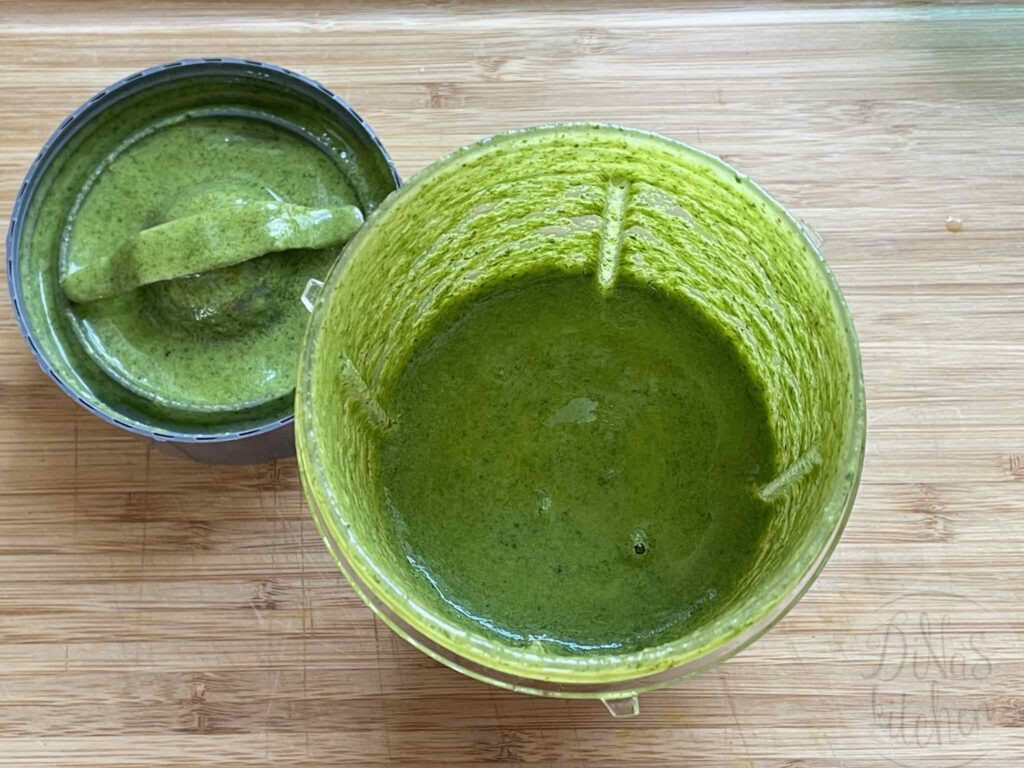
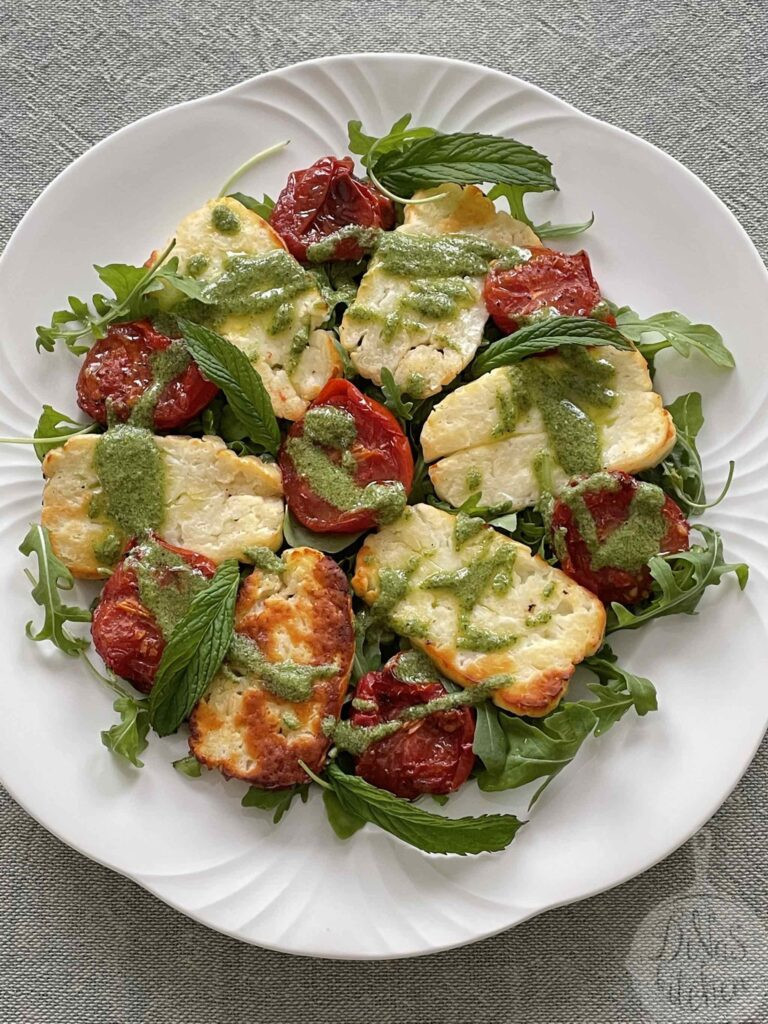
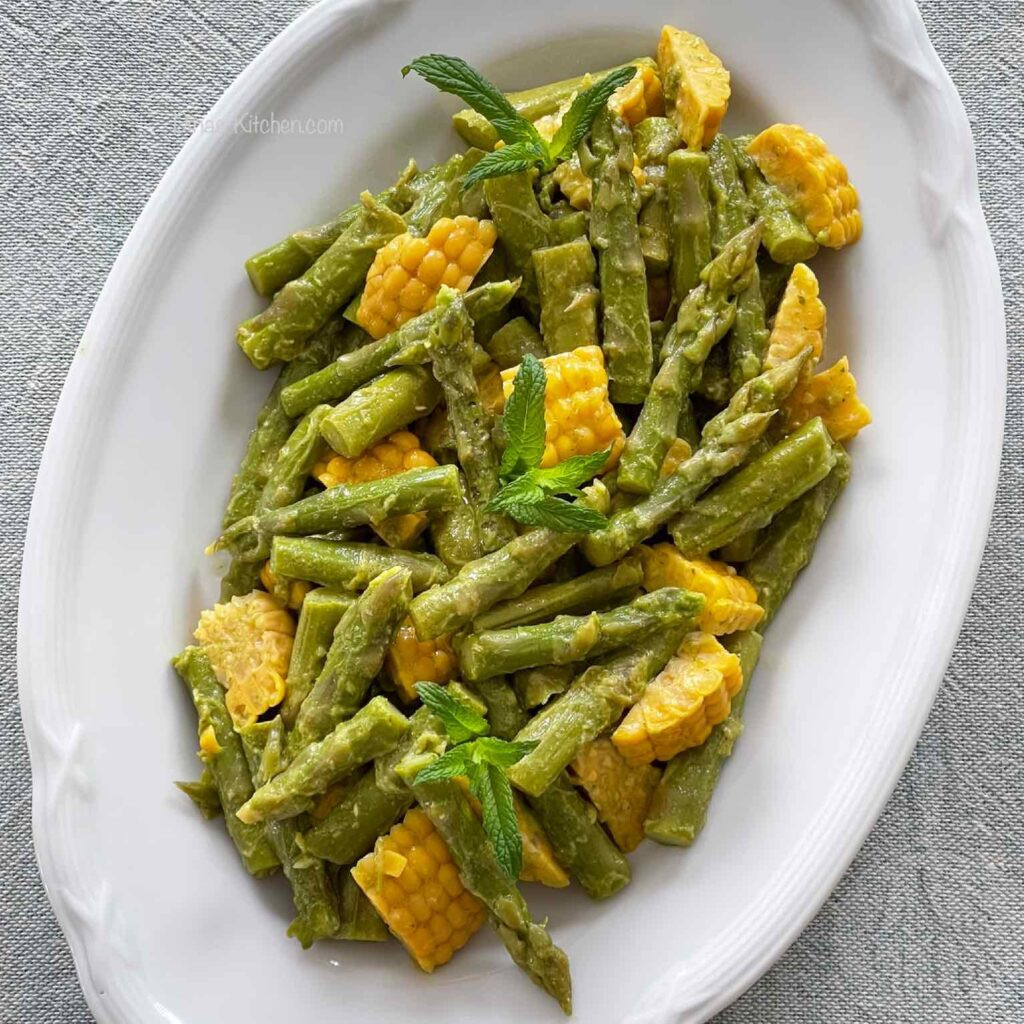
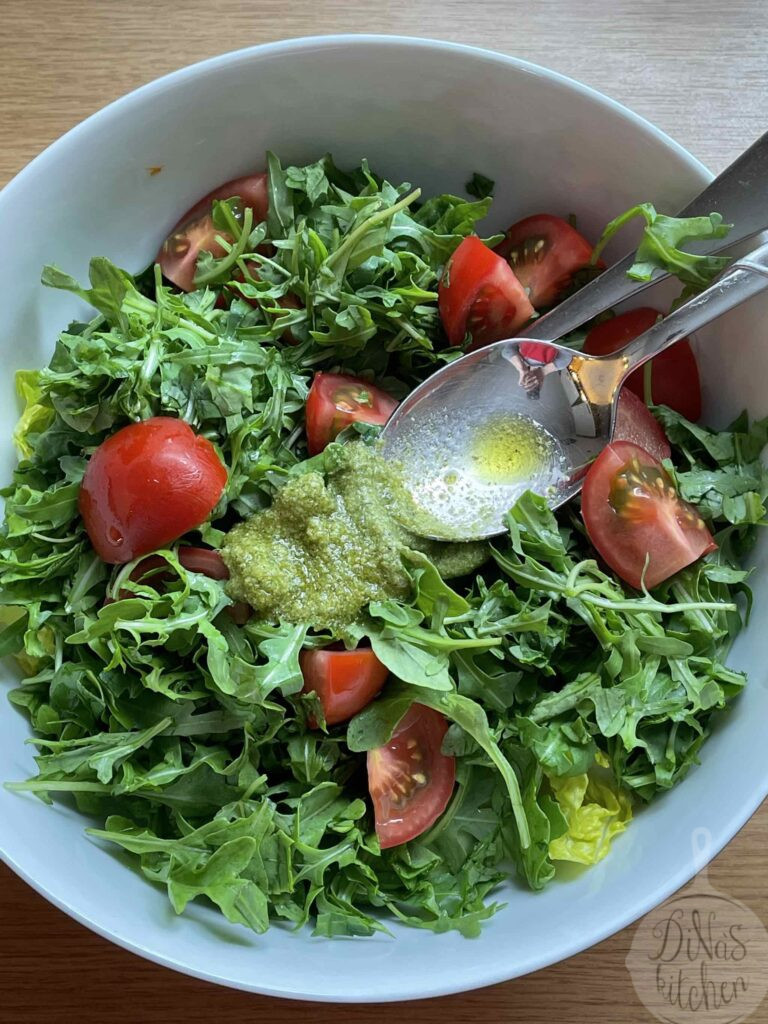
I have been using a dollop in all the salads, as well as on grilled vegetables and Halloumi, in pasta and vegetarian dishes. Prepared like the traditional pesto, it is a blend of fresh mint, fresh parsley, garlic, pine nuts, and extra-virgin olive oil. I omitted the Parmesan to make it an all-Lebanese kind of pesto!
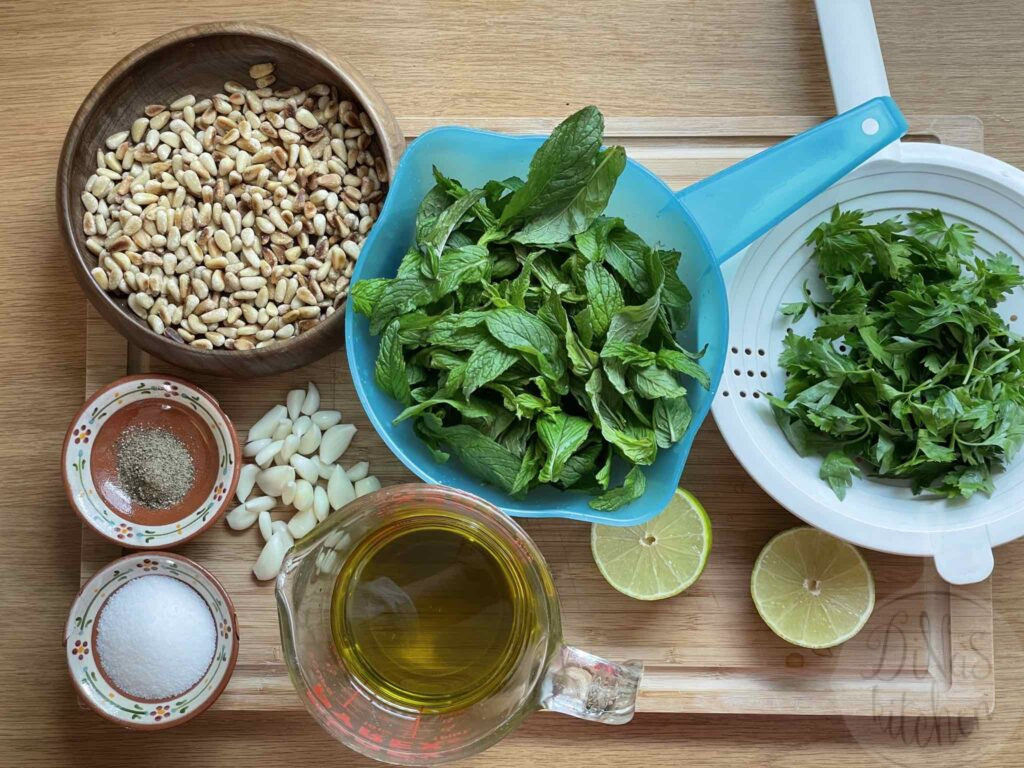

Ingredients
Equipment
Method
- Heat a non-stick heavy pan over medium heat and roast pine nuts in one layer until golden, shaking the pan occasionally. Remove immediately onto a plate and let cool completely.
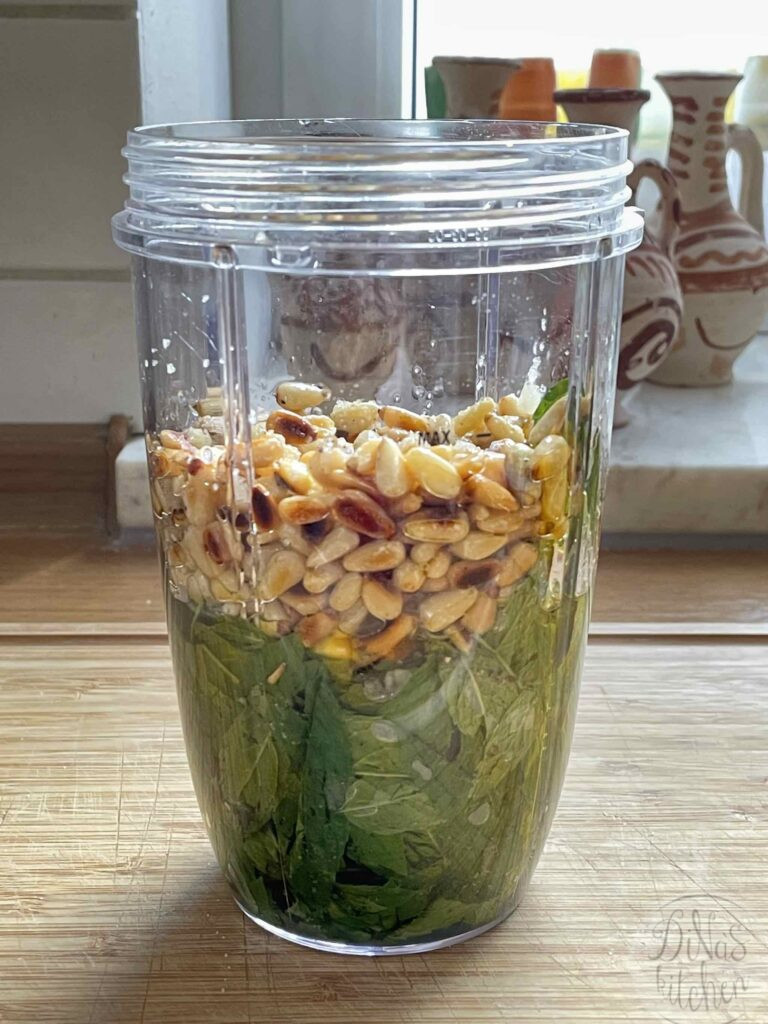
- In the bowl of a food processor or in the tall cup of a blender pulse all ingredients into a smooth pesto. Store in a covered container. Add an extra drizzle of olive oil on top before covering. Keep up to 4 weeks in the fridge.
Leave a Reply