
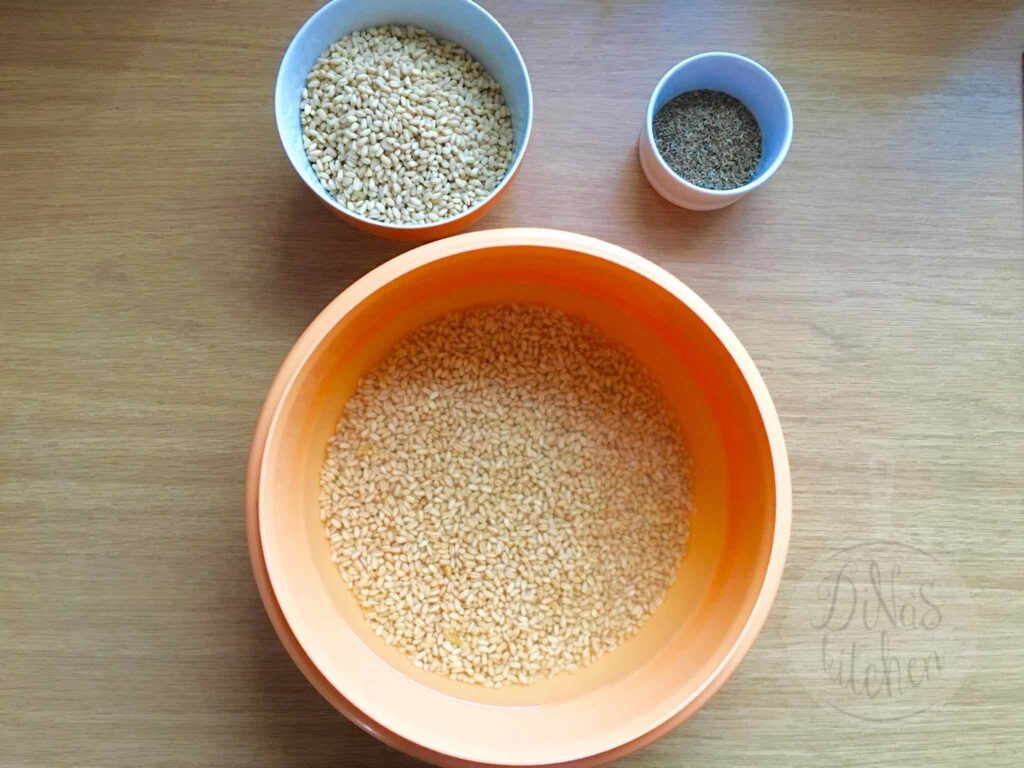
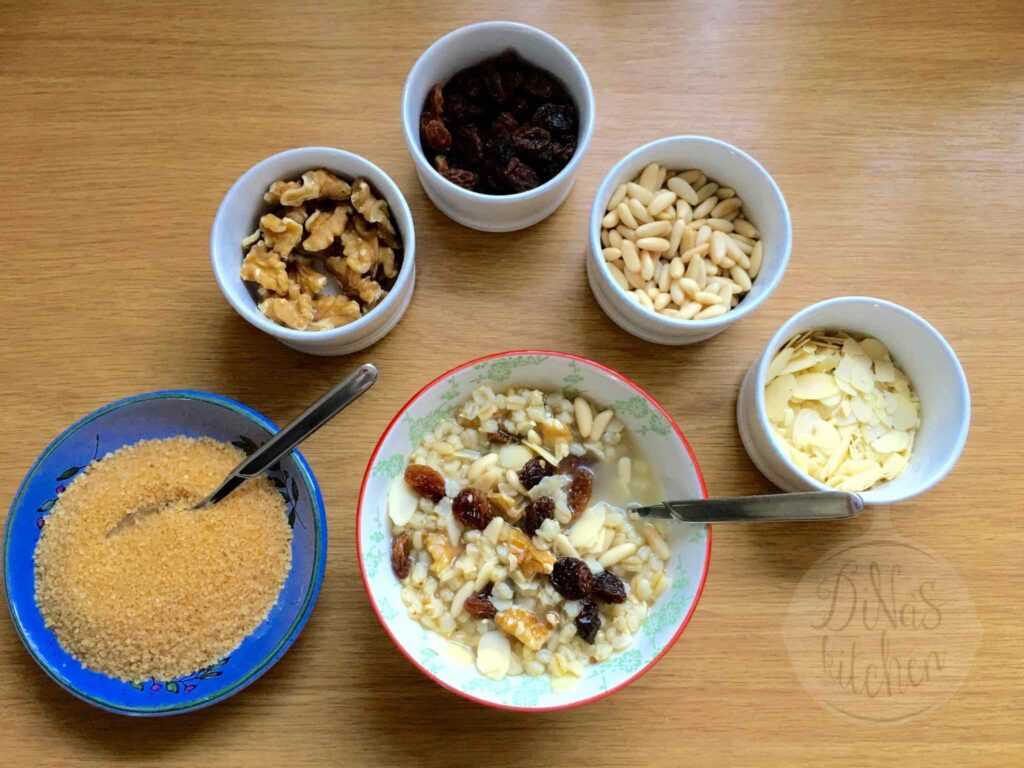
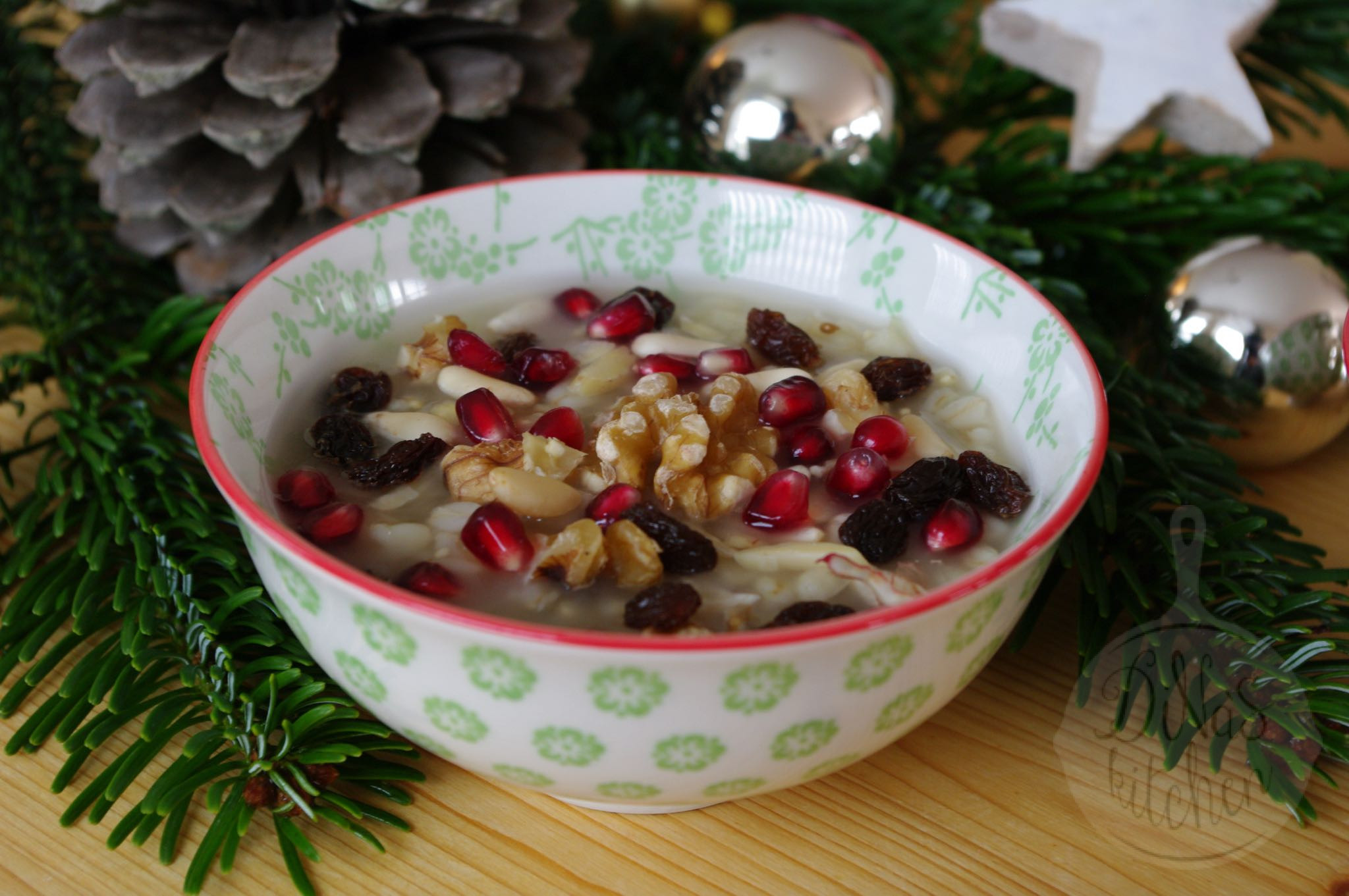
Saint Barbara’s Day (Eid el Burbara in Arabic) on the 4th of December marks the beginning of Christmas season for Christians in the Middle East. On the eve of the 3rd of December, we prepare Salika. Also known as kamih or kamhieh, it is a porridge made of hulled wheat grains cooked in water with aniseed. This rustic dish is served sweet with raisins and nuts to commemorate Saint Barbara’s martyrdom.
The Legend of Saint Barbara
As the legend has it, her pagan father kept her imprisoned in a tower to protect her from the outside world. Some say she lived in the town of Baalbeck in today’s Lebanon around 300 AD. Others believe she was from the town of Nicomedia in today’s Izmit of Turkey.
Her destiny was all but the same. When she secretly converted to Christianity to the dismay of her father, she fled the tower running through fields of freshly planted wheat field. Although the wheat in the fields miraculously started growing behind her to hide her path from the soldiers, Barbara was finally caught.
She was taken to her father who had her cruelly beaten and tortured. Refusing to renounce her Christian faith, she was then sentenced to death by fire. Her father finally beheaded her with his own hands and was struck directly afterwards by a lightning that killed him instantly. Because of her association with lightning, Barbara became the patron saint of firefighters, soldiers, miners and other professions that work with explosives.
Celebrating Saint Barbara in Lebanon
The story goes on in Lebanon that she also disguised herself to elude her Roman persecutors. Thus, this tradition of children putting on masks and dressing up on that day, going from house to house in their neighborhood for some treat. They won’t say no for a warm bowl of salikah, but they will also appreciate some money and chocolate.

If I were a child again, I would go for the healthier, heartwarming porridge, especially on a cold day like today. Why don’t you join me and soak some wheat grains for the upcoming celebration? It is one of the easiest desserts with practically no fuss at all!
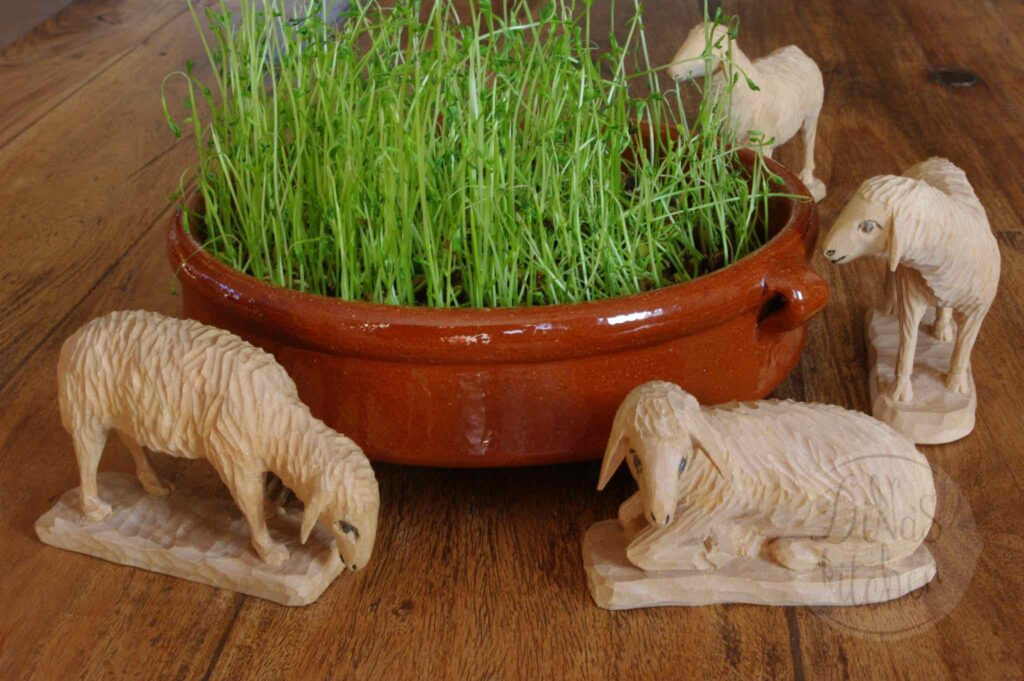
One last but most fascinating tradition on this day for us children was spreading wheat grains or lentils on a bed of cotton wool and then watering them every day until Christmas. Shoots would soon grow up to 10 cm to be used for the decoration of the displayed nativity scene under the Christmas tree.
Steps in photos

Sharing with you the recipe from The Taste of Marjeyoun

Ingredients
Method
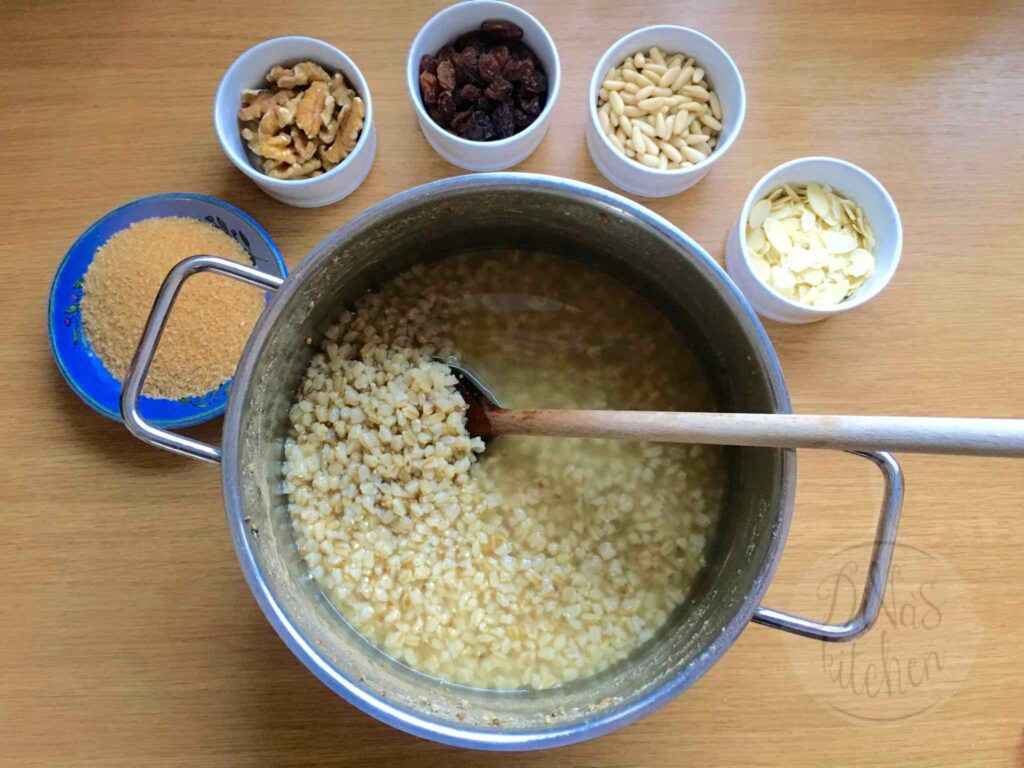
- Add the wheat grains, the water and the aniseeds to the pot. Cover and bring to a boil over high heat. Turn the heat down to a simmer and cook, covered, for about 30 minutes or until very tender.
- Serve hot salikah in small bowls, add sugar to taste and mix in some nuts and raisins. Serve immediately.
Leave a Reply